Unreleased AI Models: The Worst Risks You Need to Know
Unreleased AI models pose serious risks that you should be aware of. Discover what experts are saying about potential dangers.
unreleased AI models are raising alarms among experts. Anthropic and OpenAI staff have expressed concerns about the risks these models may pose to society.
Understanding the Risks of Unreleased AI Models
The emergence of unreleased AI models has sparked significant concern among experts in the field. As advancements in artificial intelligence accelerate, the potential risks associated with these untested technologies become increasingly apparent.
One of the primary dangers lies in the lack of oversight that often accompanies unreleased models. Without proper evaluation, the algorithms could possess biases or make decisions that are harmful or unethical. Experts warn that these models could be designed to manipulate information or deceive users, leading to a breakdown of trust in AI systems.
Furthermore, the rapid pace of development raises questions regarding security. Unreleased AI models might be vulnerable to exploitation, creating opportunities for malicious actors to use them for nefarious purposes. This could range from misinformation campaigns to more sophisticated attacks on critical infrastructure.
In light of these threats, researchers emphasize the need for stringent regulatory frameworks and ethical guidelines. It’s crucial to ensure that any AI technology, particularly those yet to be released, undergoes thorough testing to mitigate these risks and protect society from unintended consequences.
Expert Opinions on AI Development
Experts in the field of artificial intelligence are increasingly voicing concerns about the implications of unreleased AI models. According to several researchers from leading organizations such as Anthropic and OpenAI, the potential risks associated with these models could be profound and far-reaching.
One of the primary concerns is the capability of unreleased AI models to manipulate information, thereby misleading users and eroding trust in digital content. Dr. Emily Carter, a prominent AI ethicist, stated, “The ability to generate convincing misinformation is a critical threat that we cannot overlook.”
Moreover, experts emphasize the need for stringent regulations governing AI development. Dr. Raj Patel, a leading AI researcher, noted, “Without oversight, we risk unleashing tools that can significantly harm society.”
In addition to misinformation, the potential for misuse in various sectors, including finance and healthcare, raises alarms among experts. They argue that it is vital for organizations to prioritize transparency and ethical considerations during the development of AI technologies.
In conclusion, the consensus among experts is clear: the development of unreleased AI models must be approached with caution and responsibility to mitigate the associated risks.
The Future of AI Technology
The landscape of artificial intelligence is rapidly evolving, with numerous unreleased AI models on the horizon. As companies like Anthropic and OpenAI continue to innovate, the potential benefits of these technologies are accompanied by significant concerns. Experts warn that untested models could pose unforeseen risks, particularly in areas such as misinformation and manipulation.
Future AI technology is expected to be more sophisticated, capable of mimicking human behavior with alarming accuracy. This advancement raises ethical questions about the use of AI in decision-making processes, where biased algorithms could perpetuate inequality and injustice.
Moreover, as AI systems become increasingly autonomous, the risk of unintended consequences grows. Developers must navigate the fine line between innovation and safety, ensuring that unreleased AI models are rigorously tested before deployment.
In addition to technical challenges, regulatory frameworks need to evolve alongside AI advancements. Stakeholders must collaborate to establish guidelines that prioritize transparency and accountability, ultimately shaping a future where the benefits of AI can be harnessed responsibly.
The road ahead is fraught with challenges, but proactive measures can help mitigate risks and ensure that AI technology serves humanity positively.
Potential Impacts on Society
The discussion surrounding unreleased AI models has sparked significant concern among experts, particularly regarding their potential impacts on society. As these advanced technologies remain hidden from public view, their unchecked development could lead to unforeseen consequences that challenge ethical norms and safety protocols.
One major risk involves the erosion of trust in information. With the ability to generate highly convincing yet false narratives, unreleased AI models may undermine public confidence in media and communication. This could potentially exacerbate issues like misinformation and polarization.
Additionally, the misuse of these models could have detrimental effects on privacy. As they become capable of sophisticated data analysis, the risk of unauthorized surveillance and data exploitation increases, posing a threat to individual freedoms.
Moreover, the economic implications cannot be overlooked. As companies race to adopt these cutting-edge tools, the potential for job displacement and widening economic inequality looms large. The societal divide may deepen if access to powerful AI technologies is limited to a select few.
Ultimately, the implications of unreleased AI models extend far beyond technology, raising critical questions about the future of our society.
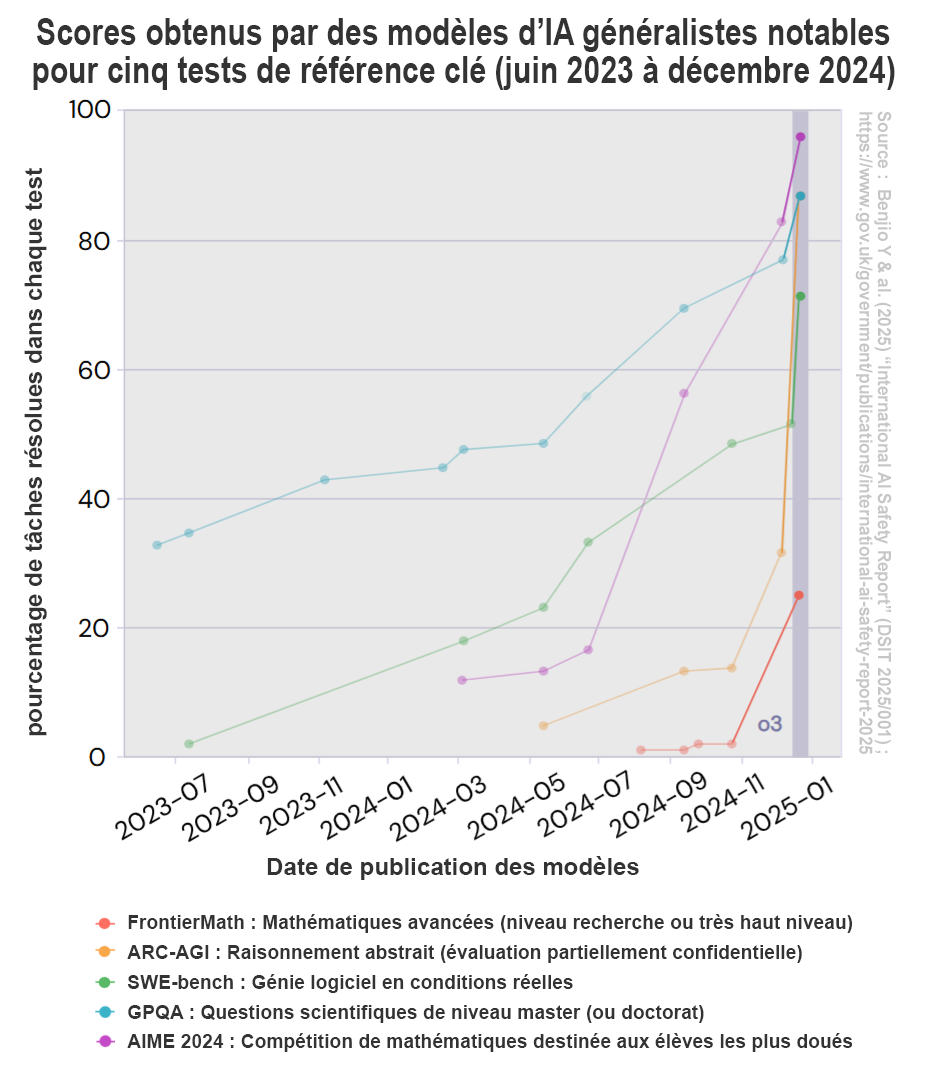
By Y. Bengio, S. Mindermann, D. Privitera, T. Besiroglu, R. Bommasani, S. Casper, Y. Choi, P. Fox, B. Garfinkel, D. Goldfarb, H. Heidari, A. Ho, S. Kapoor, L. Khalatbari, S. Longpre, S. Manning, V. Mavroudis, M. Mazeika, J. Michael, J. Newman, K. Y. Ng, C. T. Okolo, D. Raji, G. Sastry, E. Seger, T. Skeadas, T. South, E. Strubell, F. Tramèr, L. Velasco, N. Wheeler, D. Acemoglu, O. Adekanmbi, D. Dalrymple, T. G. Dietterich, P. Fung, P.-O. Gourinchas, F. Heintz, G. Hinton, N. Jennings, A. Krause, S. Leavy, P. Liang, T. Ludermir, V. Marda, H. Margetts, J. McDermid, J. Munga, A. Narayanan, A. Nelson, C. Neppel, A. Oh, G. Ramchurn, S. Russell, M. Schaake, B. Schölkopf, D. Song, A. Soto, L. Tiedrich, G. Varoquaux, E. W. Felten, A. Yao, Y.-Q. Zhang, O. Ajala, F. Albalawi, M. Alserkal, G. Avrin, C. Busch, A. C. P. de L. F. de Carvalho, B. Fox, A. S. Gill, A. H. Hatip, J. Heikkilä, C. Johnson, G. Jolly, Z. Katzir, S. M. Khan, H. Kitano, A. Krüger, K. M. Lee, D. V. Ligot, J. R. López Portillo, D., O. Molchanovskyi, A. Monti, N. Mwamanzi, M. Nemer, N. Oliver, R. Pezoa Rivera, B. Ravindran, H. Riza, C. Rugege, C. Seoighe, H. Sheikh, J. Sheehan, D. Wong, Y. Zeng, in “International AI Safety Report” (DSIT 2025/001, 2025); https://www.gov.uk/government/publications/international-ai-safety-report-2025 via Openverse